 Mt Ijen Tours
Ijen Sunrise Trek Tours
An Ijen sunrise tour is the baseline way up the volcano, and the cheapest format in our full Mount Ijen tour comparison: midnight pickup in Banyuwangi, the dark climb, the blue fire if conditions allow, and first light over the acid lake. The three treks compared here cost $12 to $15 and bundle the pieces a solo hiker buys separately — the 100,000 IDR entrance fee, a gas mask, a licensed guide and the drive to the trailhead. That pricing is the honest kind: operators buy entry and transport at local rates and earn on volume, so the cheap listing is not the trap it looks like.
Quick answer
A guided Ijen sunrise tour from Banyuwangi costs $12 to $15 and includes the entrance fee, gas mask, guide and hotel pickup. Pickup runs 23:00 to 23:30, the gates open at 2:00 am, and you are back by 09:00. The 5.0-rated trek with QimQim is the volume pick; the $12.31 listing is the cheapest way up the mountain.
Key takeaways
- All three treks bundle what solo hikers buy separately — the DIY pieces cost $19 to $27 before food
- The blue fire needs darkness: descend before 4 am or skip it and start at 3 am
- The health certificate is mandatory since January 2024 — the all-inclusive Ijen sunrise hike books the appointment
- May to October is the dry window; July and August bring the headlamp queues
- Sunrise from the rim is the guaranteed payoff — the flames are the lottery ticket
The Three Treks We Compare
Prices, ratings and review counts were read from the GetYourGuide listings in August 2026. The main button on each card opens the listing; booking, payment and cancellation happen on the platform.
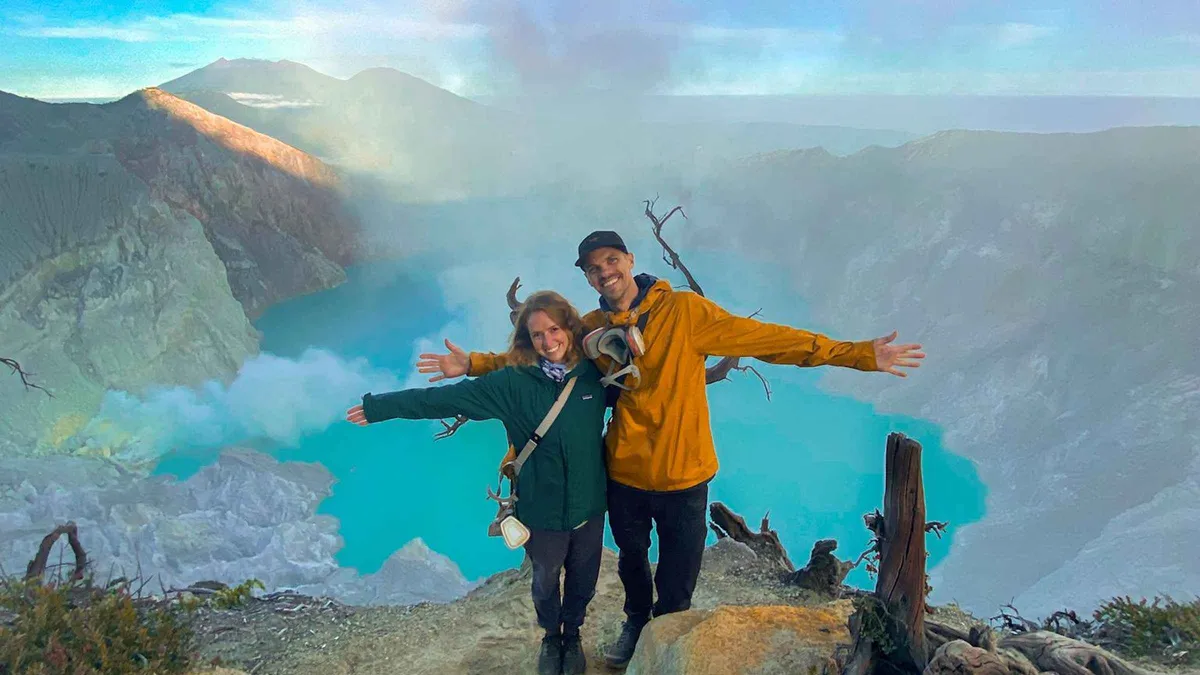 from $12.31
Cheapest Trek
from $12.31
Cheapest Trek Kawah Ijen Volcano Midnight Trek & Sunrise Experience
Midnight pickup in Banyuwangi, crater rim by 3:30 am, blue fire if the gas allows, sunrise over the acid lake. Entrance, gas mask and guide are in the $12 price.
Check Availability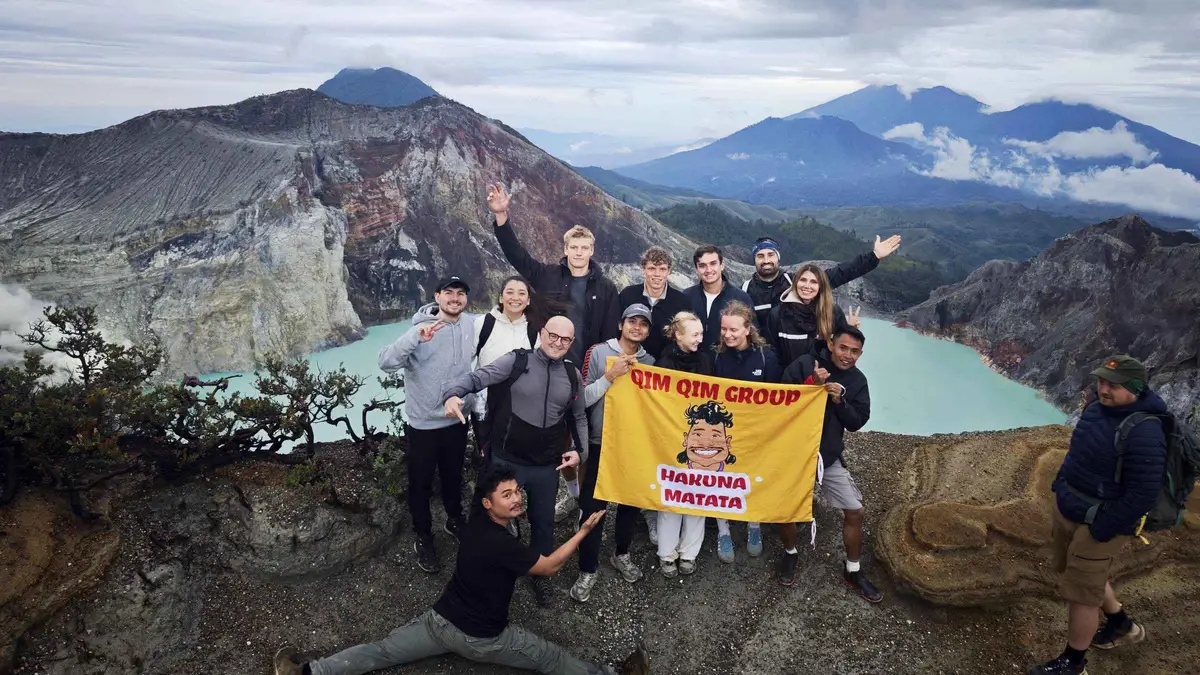 from $12.80
#1 Seller
from $12.80
#1 Seller Ijen Volcano Sunrise Tour with Pickup & Professional Guide
The best-reviewed Mount Ijen tour on GetYourGuide: 1,863 reviews at 5.0, run by local guide Haqim (QimQim) with fast-track entry and a coffee break at the sunrise viewpoint.
Check Availability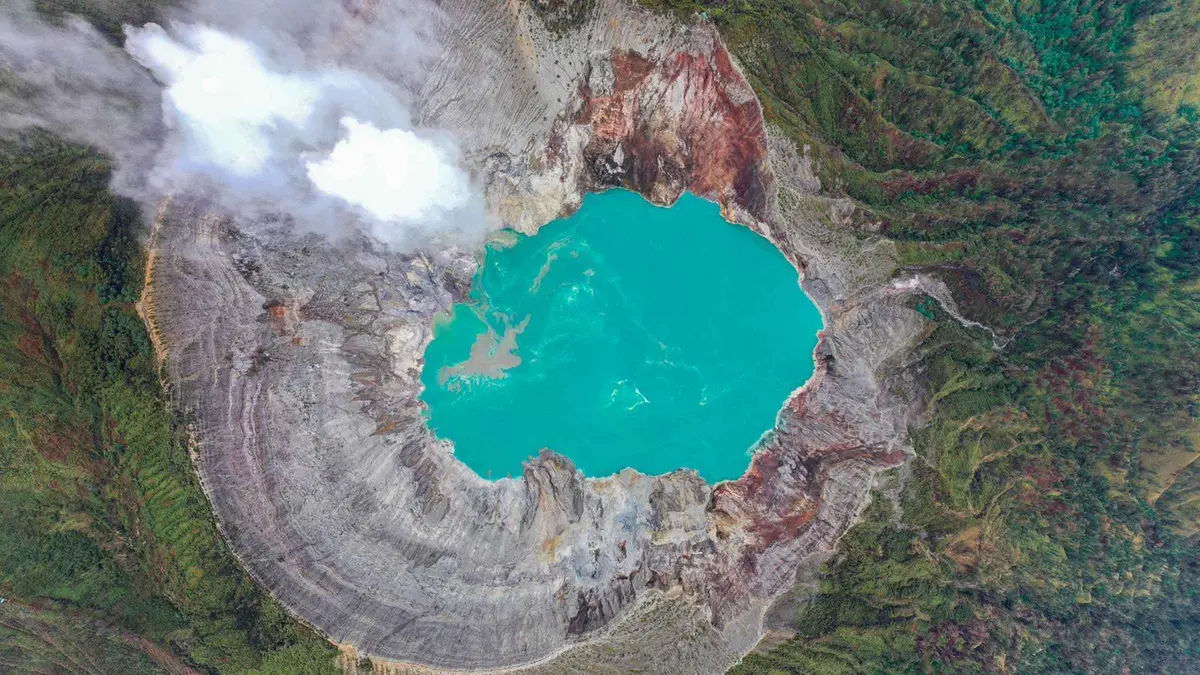 from $14.55
All-Inclusive
from $14.55
All-Inclusive Banyuwangi or Bali Sunrise Ijen Vulcano Hiking All Inclusive
Sunrise trek with pickup from Banyuwangi or Bali, all fees paid: entrance, health check appointment, gas mask and breakfast are inside the price.
Check AvailabilityWhat Each Price Buys
The three listings look interchangeable at a glance. The differences sit in the bundle and the operator.
| Trek | Price | Duration | Book | Bundled in | Rating | |
|---|---|---|---|---|---|---|
| Midnight trek & sunrise | $12.31 | 9 hours | Check Availability | Entrance, mask, guide, pickup | 4.9 (553) | → |
| Sunrise tour with QimQim | $12.80 | 6–20 hours | Check Availability | Fast-track entry, coffee break, Bali option | 5.0 (1,863) | → |
| All-inclusive sunrise hike | $14.55 | 9–23 hours | Check Availability | Everything incl. health-check appointment and breakfast | 4.9 (244) | → |
All three run nightly in dry season. The Bali pickup options on the guided Ijen sunrise tour and the all-inclusive Ijen sunrise hike add the ferry legs and stretch the duration figure; the Banyuwangi versions are the 9-hour shape.
What a $12 Trek Includes, and What It Doesn't
In the price
Hotel pickup in Banyuwangi between 23:00 and 23:30, the 1.5-hour drive to Paltuding, the entrance fee (100,000 IDR weekdays, 150,000 IDR weekends), a gas mask with a real filter, a headlamp if you need one, and a guide who has walked the trail hundreds of times. The all-inclusive Ijen sunrise hike also books the mandatory health-certificate appointment (about 50,000 IDR solo) and feeds you breakfast on the way down. Since 6 January 2024 the health certificate is required for every hiker, so a tour that handles it removes the one genuinely annoying errand.
Not in the price
Food and drinks beyond what the listing names — the stalls at the basecamp and at posts 3 and 5 sell coffee and instant noodles for small cash. Trekking poles rent separately at the base. The cart ride up, if the climb defeats you, is a private negotiation with the porters at 600,000 to 1,000,000 IDR round trip, and it is not the tour's business.
Tips for guides are expected in the same informal way they are across Java.
The operator difference
The guided Ijen sunrise tour is the listing reviewers book by the guide's name: Haqim, who goes by QimQim, runs a team travellers describe as first at the checkpoint and unhurried at the viewpoints. 1,863 reviews hold it at a flat 5.0, which on a $13 product is the strongest signal on this page. The midnight Kawah Ijen trek undercuts it by fifty cents and reviews nearly as well at 4.9 from 553. If the exact operator matters to you, that is the real choice here; the itineraries are the same mountain on the same clock.
Managing Expectations on the Blue Fire
Some nights it is faint
The flames are burning sulfuric gas, and their size moves with volcanic activity, wind and cloud. Travellers who caught a strong night describe walls of blue; others report faint flickers barely visible past the crowd, and the flames are never guaranteed by any operator. Miners also damp sections of the flame to protect sulfur yields — their livelihood outranks your photograph.
Treat the blue fire as a probability, the sunrise as the certainty, and July and August as the months when you will share the viewing ledge with the most headlamps.
Skipping it changes your night
If you decide the descent is not for you — steep, unrailed, dark, and the single hardest stretch of the route — you can start the climb around 3 am instead of 2:00 am and still make the rim comfortably before first light. Tell the operator when they confirm pickup; most will shift your collection an hour later. You lose the flames and keep the sunrise, the lake reveal and two extra hours of sleep, which several reviewers rate as the better trade.
The Night, Stop by Stop
23:00 — the pickup
Vans sweep central Banyuwangi between 23:00 and 23:30 — hotels, homestays, the station area. You will not sleep on the drive: the last half of the 1.5 hours to Paltuding is switchbacks through coffee plantations, and the van works for its altitude. Paltuding basecamp sits at about 1,850 m, and the temperature drop from town is the first shock of the night.
The stalls at the trailhead pour hot coffee and instant noodles all night, and they are the correct decision.
02:00 — the gates
Guides collect the tickets, the health checks happen where the operator runs its own, masks get fitted, and the gate opens at 2:00 am sharp. The first two kilometres carry most of the 600 m of climbing on a wide sandy track — steep enough that the porters with their carts wait at the bottom for customers who overestimated themselves. Posts 3 and 5 have toilets and warm drinks; after post 5 the grade eases and the sulfur smell arrives ahead of the crater.
03:30 — the rim, and the choice
Ninety minutes puts most groups on the crater rim in full darkness. The choice happens here: down to the flames or along the rim to the sunrise spot. The descent is 25 minutes of steep, unrailed switchbacks shared with working miners, and it is the part every safety restriction is written for.
Guides read the gas and the queue and give you an honest go or no-go. Nobody thinks less of the no.
05:00 — the reveal
First light lands around 5:00 to 5:30 depending on the month, and it is the reason the whole industry exists: a kilometre-wide turquoise lake materialising below the rim, sulfur steam drifting off the vents, the crater walls going from black to ochre in about twenty minutes. The brick shelters at the sunrise viewpoint block the wind. Guides run coffee here, and the descent to the car park afterwards takes under an hour in daylight, past the miners hauling their first loads up.
Conditions by Month
May to October — the season
The dry months are the reliable window: clear pre-dawn skies, the best blue-fire visibility, and a track that holds underfoot. Pre-dawn temperatures on the rim run 0 to 8°C in these months — genuinely cold, and the reason gloves and a beanie appear on every packing list. July and August are peak: the flames draw their biggest crowds, vans queue at Paltuding, and the sunrise spot fills early.
June and September buy the same weather with elbow room.
November to April — possible, wetter
The wet season does not close the mountain, but it loads the dice: the park opens late or not at all after heavy rain, cloud sits on the crater more nights than not, and the sandy track turns into a slide on the descent. Pre-dawn temperatures are milder at 8 to 12°C. If your dates land here, book a listing with free cancellation and hold your nerve until the day before — operators track the mountain's status and will tell you honestly, since a rained-out group is a refund headache for them too.
Any month — the closures
Ijen closes the first Friday of every month, full stop — plan around it, because the operators will not move it for you. Volcanic activity adds unscheduled closures of the crater descent or the whole mountain; the descent has been restricted repeatedly since the 2024 seismic activity. Tours reroute to a rim-only night when that happens.
The sunrise does not care about any of it.
You Are Trekking Through a Working Mine
The other people on the trail
Ijen has been mined for sulfur since 1968, and the men you pass in the dark are on shift: loads of 70 to 90 kg in wicker baskets, carried from the lake edge up the same unrailed path tourists descend, then three more kilometres down to the weighing post — one or two loads a night, paid by the kilo at rates that translate to a few euros per load. The etiquette is simple and guides enforce it: give way on the narrow sections, ask before photographing a person, and if you want to put money directly into the economy you are gawking at, buy one of the small carved-sulfur souvenirs they sell at the rim rather than haggling one down.
Why this improves your tour, oddly
A meaningful share of the guides on these treks are former miners or miners' sons — QimQim's team on the guided Ijen sunrise tour leans into exactly that — and the commentary that comes with that biography is the difference between a hike and the thing reviewers write paragraphs about. The mine also explains the trail's infrastructure: the carts touting rides up, the weighing post, the stalls. You are walking through a workplace that tolerates tourism gracefully, and the treks that acknowledge it read very differently from the ones that pretend the mountain is scenery.
The Solo Alternative, Priced Against These Treks
The component costs
Do it yourself from Banyuwangi and the receipt reads: entrance 100,000 IDR weekdays or 150,000 IDR weekends, midnight transport at about 125,000 IDR per person in a shared car (200,000 by ojek), mask rental around 40,000 IDR, health certificate about 50,000 IDR at a clinic the afternoon before. That is $19 to $27 before food, against $12.31 to $14.55 for the packaged version of the same night. The treks are cheaper than their own ingredients because operators buy at local rates and fill vans nightly.
When solo still makes sense
Your own motorbike over 110cc, a bed in Licin at the volcano's foot, and no group clock: that combination beats any tour for a photographer waiting on light or a hiker who wants the rim to empty. Follow the car route on the navigation apps rather than the motorbike shortcut, buy the ticket through your accommodation, and treat the first-Friday closure and the volcanic-status check as your own responsibility — the operators do this for their groups, and nobody does it for you.
Where to Sleep Before a 23:00 Pickup
Central Banyuwangi — where the tours collect
The town is the practical base: every trek on this page picks up there, the restaurants and minimarts solve your pre-trek evening, and the station puts you one train from Probolinggo if Bromo is next. The trade-off is the 1.5 hours drive to the trailhead on both ends of an already short night. Book a room with a late checkout if you can — you will be back at 09:00 wanting nothing but a shower and a horizontal surface.
Licin — for the shortest possible night
The villages on the Licin road sit at the foot of the volcano, some within minutes of the gate, and a couple of homestays there are run by former sulfur miners whose breakfast-table stories outrank anything a guide says on the trail. Fewer restaurants, fewer services, and most tours will not collect there — Licin is really the solo hiker's base. If you have booked a trek, stay central; if you are doing the mountain on your own clock, Licin is the cheat code.
The Health Certificate, in Detail
How the rule works
Since 6 January 2024 the park admits nobody without a certificate of fitness — a blood-pressure check and a doctor's signature, issued by local clinics for about 50,000 IDR and valid for the climb it was issued for. The rule exists because the trail mixes altitude, exertion and sulfur gas; it bars people with heart conditions, pregnant travellers and children under 3 outright, and it is checked at the gate, not waved through. Tours either run the clinic stop en route or operate their own check at the basecamp; the all-inclusive Ijen sunrise hike folds the appointment into its price, which is the tidiest version.
What solo hikers do about it
Get it the afternoon before, not the night of: clinics in central Banyuwangi issue certificates during normal hours, your accommodation will name the nearest one, and the whole errand takes under thirty minutes with your passport in hand. Arriving at Paltuding at 1:30 am without the paper means arguing with rangers who have heard every version of the story and admit none of them. It is the least skippable item on the solo checklist, ahead of even the mask.
Photographing the Sunrise Without Ruining It
The shots the mountain gives you
Three windows, in order: the blue fire at 3:30 to 4:30, which wants a tripod, high ISO tolerance and honest expectations — most phone footage of the flames disappoints its owner; the pre-dawn rim, where the headlamp chains snaking up the trail make the frame everyone forgets to take; and the reveal itself, when first light drops into the crater and the lake goes from rumour to turquoise in twenty minutes. The brick shelters at the sunrise spot mark the classic angle, but the rim's western curve clears the crowd for the price of a ten-minute walk.
What the conditions do to gear
Sulfur air is mildly corrosive and the pre-dawn rim sits at 0 to 12°C: batteries drain fast, lens changes in the gas cloud are a bad idea, and everything metal comes home smelling faintly of match heads. Bring double the battery you think, keep the spare warm in an inside pocket, and leave silver jewellery at the hotel — it blackens overnight in this air. A phone on a small tripod outshoots a mishandled camera here; the light does the work if you hold still and let it.
After the Trek: The Rest of Your Banyuwangi Day
The 09:00 problem
The vans drop you back mid-morning, wrecked and wired, with a whole day standing awkwardly in front of you. The experienced answer: shower, sleep until early afternoon, and keep the evening simple — Banyuwangi's warungs and night stalls reward a short walk more than a plan does. Travellers stacking sights book the private crater-and-waterfall format instead, which folds Jagir waterfall into the same outing and hands back the afternoon honestly.
Moving on the same day
Onward travel works if you respect the timetable: the midday train toward Probolinggo makes a same-day Bromo connection possible (the multi-day combos automate exactly this), and the Ketapang ferry runs continuously for anyone Bali-bound — you can be back on the island by mid-afternoon. What fails is the ambitious version: a same-day flight out of Banyuwangi's airport after a 2 am start invites a missed connection the first time anything slips.
What to Wear at 2 am on a Volcano
Dress for two climates
You start the night at 0 to 12°C depending on month and finish the morning at 25°C in full sun. Layers solve it: a base layer, a fleece, a windproof shell on top, beanie and gloves for the rim, and something light underneath for the walk down (the full packing list goes item by item). Shoes with real grip are non-negotiable — the track is sand over rock and the descent punishes smooth soles.
Reviewers who came in trainers mention it; reviewers who came in sandals get quoted as warnings.
What the tour hands you, and what it does not
The treks provide the gas mask and usually a headlamp — confirm the headlamp when the operator messages you, and bring your own if you like a fitted one. Not provided: water beyond the first bottle, snacks, sunscreen for the descent, cash for the coffee stalls at posts 3 and 5, and a raincoat in the shoulder months. Leave silver jewellery at your accommodation; a night in sulfur air turns it black, rings included.
Trekking poles rent at the base for small money and earn it on the way down.
Which Trek Fits You
The lowest price on the mountain
Best for: Budget travellers
The midnight Kawah Ijen trek at $12.31 with the full bundle. Fifty cents cheaper than the volume leader and rated 4.9.
Kawah Ijen Volcano Midnight Trek & Sunrise ExperienceThe operator with the name
Best for: First-timers who want a known guide
The guided Ijen sunrise tour — QimQim's team, 5.0 from 1,863 reviews, fast-track entry, coffee at the sunrise viewpoint.
Ijen Volcano Sunrise Tour with Pickup & Professional GuideZero errands
Best for: Anyone arriving same-day
The all-inclusive Ijen sunrise hike folds in the health-check appointment and breakfast — the only trek where the certificate is not your problem.
Banyuwangi or Bali Sunrise Ijen Vulcano Hiking All InclusiveOther Ways Up
The same volcano in four other formats, each compared on its own page.
More comfort
Sunrise Trek Questions
Is Ijen really worth it?
For the sunrise and the lake, yes — a kilometre of turquoise acid appearing out of blackness is the image people cross Java for. The honest caveats: the 2 am start hurts, peak-season crowds are real, and the blue fire underdelivers on some nights. Budget the $12 to $15 and a lost night of sleep, and judge the trade on the sunrise alone; the flames are the bonus.
Is Ijen a difficult hike?
Moderate. 3.5 km one way, about 600 m of gain, roughly 1.5 hours up on a steep sandy track with no technical sections. Rest posts 3 and 5 have toilets and hot drinks. The optional descent to the flames is the hard part — steep, loose and unrailed in the dark — and the park bars it for anyone with asthma, heart conditions or pregnancy. Every hiker needs the health certificate regardless.
What time does an Ijen sunrise tour start?
Pickup in Banyuwangi runs 23:00 to 23:30, the gates open at 2:00 am, and most groups stand on the rim by 3:30. Sunrise lands around 5:00 to 5:30 depending on month. If you skip the blue fire descent, a 3 am start still makes the rim in time. You are back at your hotel around 09:00.
Where do these tours pick up?
Anywhere in central Banyuwangi — hotels, homestays and the station area. The guided Ijen sunrise tour and the all-inclusive Ijen sunrise hike also sell from-Bali versions with the ferry crossing built in; if that is your situation, the from-Bali comparison covers the trade-offs properly.
How much does an Ijen sunrise tour cost?
$12.31 to $14.55 from Banyuwangi on the current listings, checked August 2026 — entrance fee, gas mask, guide and pickup included. The from-Bali versions of the same treks run higher because of the ferry legs; the from-Bali comparison prices those properly. Solo, the same night costs $19 to $27 in pieces plus the errands.
Which is the best Ijen sunrise tour?
By the numbers, the QimQim trek: 5.0 from 1,863 reviews, fast-track entry, and a guide travellers book by name. The honest caveat is that all three listings climb the same trail on the same clock — the operator and fifty cents of price are the real differences. If a bundled health check and breakfast matter, the all-inclusive Ijen sunrise hike takes it.
What is the typical Ijen sunrise tour itinerary?
Pickup 23:00–23:30 in Banyuwangi, Paltuding basecamp by 01:30, gates at 2:00 am, crater rim around 3:30, optional 25-minute descent to the blue fire, sunrise from the rim at 5:00–5:30, walk down in daylight, back at your hotel by 09:00. The stop-by-stop breakdown above covers what each hour feels like.
Where can I see the best sunrise in Indonesia?
Ijen and Bromo own the argument for Java: Bromo gives the postcard panorama across the Tengger caldera, Ijen gives the stranger show — a turquoise acid lake appearing out of blackness below your feet. Photographers tend to rank Bromo's vista higher and Ijen's reveal deeper. The multi-day combos settle the question by refusing to choose.
Do Ijen sunrise tour packages include pickup from Bali?
Two of the three do as an option — the guided Ijen sunrise tour and the all-inclusive Ijen sunrise hike both sell from-Bali versions that add the Gilimanuk ferry legs and stretch the trip to 20-plus hours. The dedicated from-Bali comparison prices those against the options built for that route, including the only one with a hotel room in it.
What do reviews actually say about these treks?
The pattern across 2,600+ reviews on the three listings: guides get named and praised (QimQim's team most of all), the sunrise outrates the blue fire, the cold surprises people, and the complaints cluster on crowding in July and August rather than on the operators. The 4.9-to-5.0 spread has held across volume, which on $12 products is the strongest quality signal the platform produces.
Can children join an Ijen sunrise trek?
The park bars children under 3 outright, and the health-certificate screen applies to everyone regardless of age. Practically, operators welcome school-age kids on the rim route — the climb is 90 minutes of steep walking, not scrambling — but the blue-fire descent is adults-only territory on most listings, and a cold, dark 2 am start tests family morale before the trail does. Families who go rate the sunrise as worth the mutiny.
What about the entrance fee on weekends?
The foreigner rate rises from 100,000 IDR on weekdays to 150,000 IDR on weekends and public holidays. Every trek on this page absorbs the difference — the listed price does not change with your date — which quietly makes a Saturday climb the best-value day to book a tour and the worst day to go solo. The mountain also closes the first Friday of each month, whichever way you are arranging it.
How cold does it actually get on the rim?
Zero to 8°C before dawn in the dry months of June through October, 8 to 12°C the rest of the year — plus wind, at 2,386 m, after four hours of sweating uphill. It is the gap between the forecast and the felt temperature that catches people: Banyuwangi's tropical evening gives no warning of what the rim does at 4 am. The beanie-and-gloves advice on every packing list is not ritual; the coffee stalls at the sunrise spot do their best trade at first light for a reason.